Reselling a few products, coordinating several sales channels and tracking production stock require different inventory systems. The first may fit inside accounting software; the others may need a connected inventory platform or ERP. Trace a purchase, sale, return and stock-cost entry for a representative SKU through to the ledger.
A correct quantity on the shelf does not settle the accounting for that stock. Different purchase costs, unfinished production, refunds and marketplace commissions create questions about inventory value as well as item counts.
A software demo may show the correct quantity on a shelf and never answer a different question: what value went onto the balance sheet, and what expense appeared when an item sold?
Which inventory accounting setup fits your business?
Pick the simplest of these three setups that fits how your products move through the business and where the financial record belongs.
| Setup | Good candidate when | Skip it when |
|---|---|---|
| Inventory within accounting software | Finished goods are purchased and resold through ordinary invoices and receipts. | Required locations, production steps, or fulfillment operations exceed the native module. |
| Inventory management system (IMS) plus accounting | Several sales channels or warehouses need specialized stock controls while the accounting ledger stays in place. | Connectors cannot reliably preserve item identity, costs, returns, and financial entries. |
| Integrated ERP | Purchasing, production, work in progress, and finance share complex processes. | Implementation and administration outweigh the operational benefit. |
QuickBooks Online, for example, documents native inventory tracking in Plus and Advanced, with some other plans requiring an add-on or upgrade. A business with straightforward resale might start there. A manufacturer assigning components to jobs has different requirements.
Time spent moving costs between programs counts as much as the stock count. One sporting-goods seller works out purchase costs in spreadsheets, then moves them into QuickBooks and Shopify:
I sell sporting goods and I’ve been keeping track of my SKUs and their COGS in google sheets. I f*&ing hate it. Keeping track of all the POs/invoices, shipping, duties etc and then manually putting them in Excel sucks. I don’t even update it most of the time because it takes so long. I can’t afford Netsuite or anything. Is anyone else doing this an easier way that I’m missing?? Help! Edit: thanks for the tips everyone! We do use Quickbooks. It’s still just a PITA to manage/do the math for COGS in excel then translate it to QBO and Shopify.
Draw one workflow from buying a product to selling it. Mark the channels, warehouses, and any repair or manufacturing steps. Do this before you compare vendors.
What must inventory accounting record, and when does it enter the books?
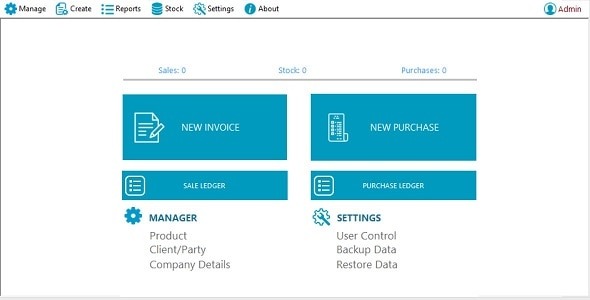
Stock quantity, inventory value, and cost of goods sold are connected but separate records. Inventory Asset carries the value of goods held for sale on the balance sheet. COGS is the cost assigned to goods sold on the income statement.
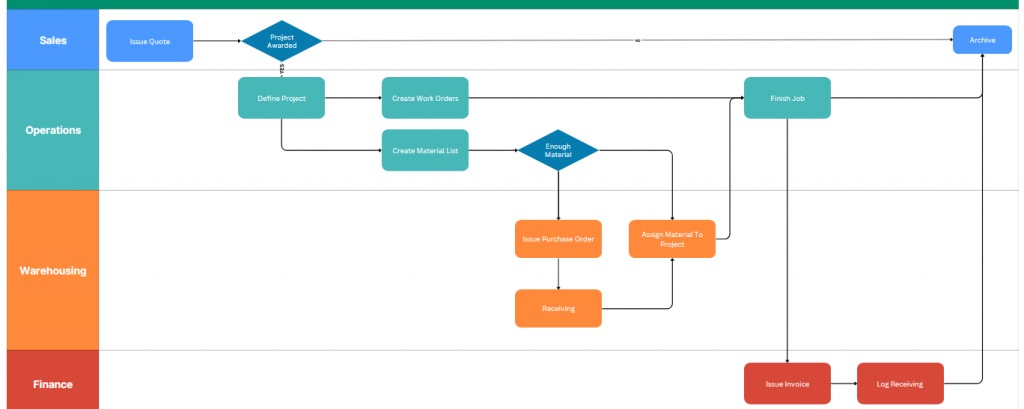
A purchase order establishes what you intend to buy. Receiving the goods changes the operational stock record, and entering the supplier’s bill records a payable. Shipping a product and issuing a customer invoice can be separate events too. Returns and stock adjustments add further changes.
The accounting entries depend on the configured workflow. The Odoo 19 inventory valuation documentation distinguishes operational stock valuation from financial accounting valuation. Stock movement and the ledger entry can post at different times.
Say a purchase arrives Monday, the vendor bill is entered Wednesday, and the product ships Thursday. Your software can record inventory and financial events on different days.
For each transaction type you process, write down which event changes quantity, inventory value, and the general ledger (GL). Cover goods receipts, vendor bills, fulfillment, customer invoices, returns, and adjustments. An unmapped item, or freight and duties in the wrong account, leaves your stock report and your accounts out of step.
Which costing method, software edition, and US tax treatment apply?
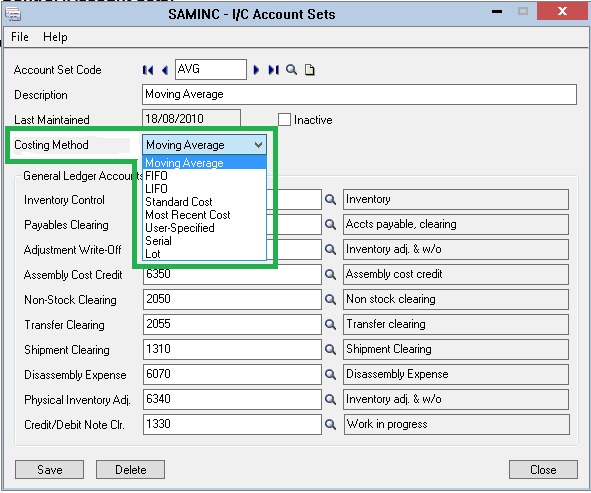
Costing methods set how the cost of sold units is assigned and what value stays in stock. Two correctly configured systems can produce different COGS on identical transactions because they use different permitted methods.
With first in, first out (FIFO), each sale uses the oldest recorded purchase costs first. Moving average calculates a weighted unit cost from qualifying receipts. Standard costing uses a predetermined cost and may require separate variance accounting.
Intuit’s inventory valuation guide explains FIFO using QuickBooks Online examples and illustrates moving-average calculations with Intuit Enterprise Suite.
Intuit also warns that you cannot change the costing method later in the setup it describes. If you create a QuickBooks Online inventory item before choosing a method, the account defaults to FIFO and the method-selection option may no longer appear.
Xero’s tracked-inventory documentation describes average-unit-cost behavior, and Zoho Inventory’s describes FIFO and weighted-average preferences.
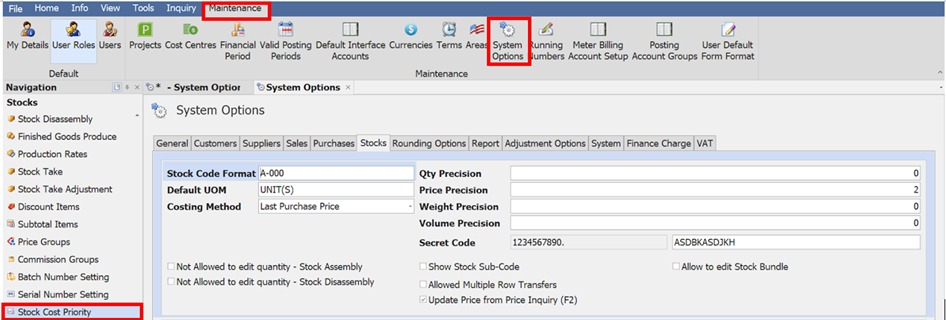
US tax treatment is a separate decision. IRS Publication 334 explains inventory, COGS, applicable inventory costs, and exceptions for qualifying small-business taxpayers. Confirm your method, any election, and the tax-year rules with a US accountant before you adopt or change a method.
How can you prove that COGS and inventory value reconcile?
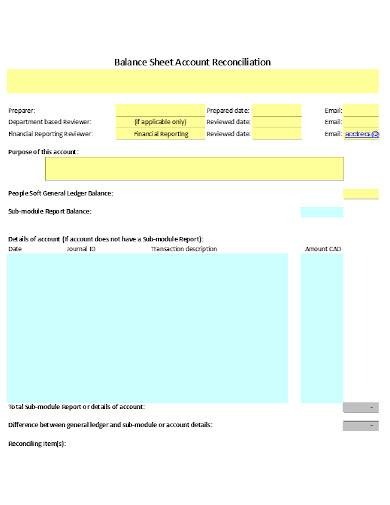
Run a controlled purchase-and-sale sequence with known costs, then compare the system’s valuation report with the general ledger. Calculate the expected amounts before anyone opens a vendor dashboard.
Receive ten units of the same SKU at $10 each, then another ten at $16. Assume no added freight, return, write-down, or adjustment before the sale. The twenty units cost $260 in total. Then sell eight.
| Transaction or result | FIFO | Moving average |
|---|---|---|
| First receipt: 10 units at $10 | $100 | $100 |
| Second receipt: 10 units at $16 | $160 | $160 |
| Value before sale | $260 | $260 |
| Cost of eight units sold | $80 | $104 |
| Remaining quantity | 12 units | 12 units |
| Remaining inventory value | $180 | $156 |
| COGS plus remaining inventory | $260 | $260 |
FIFO assigns $10 to each of the first eight units sold. Moving average assigns $13 per unit, which is $260 divided by twenty units. COGS and ending inventory differ between the methods, and the total original cost stays $260. On these eight units, COGS differs by $24.

In a perpetual setup that posts inventory cost at the sale, the entry debits COGS and credits Inventory Asset by $80 under FIFO or $104 under moving average. If your setup posts costs at a later event or at period close, check the entries against that posting schedule.
If you import goods, repeat the test with freight or duties allocated to the relevant items. The added cost should show up in inventory value and flow into cost allocation under your chosen method and posting setup.
Extend the test through a return and an adjustment
After the initial sale, process a customer return of one unit and, separately, an adjustment for a damaged unit. Compare quantity, inventory asset, COGS, posting dates, and the audit trail. The cost of the return depends on how the system reverses the original sale under its costing method.
Compare the inventory valuation report and the Inventory Asset ledger at the same cutoff, scope, and accounting basis. If they disagree, inspect entries from inventory items, manual journals, posting dates, and transactions awaiting correction.
These Manager Forum contributors raised separate COGS and costing questions in different threads:
The system only seems to ‘flush’ or record the total cost once the inventory quantity for that specific item reaches zero.
…
Despite selling inventory items, the Cost of Goods Sold (COGS) is not appearing in the P&L
…
the system is calculating the cost of inventory from the sell invoices each invoice the system generate cost of good
In the first thread, the contributor later reported that recalculating inventory and creating the pending cost correction made COGS appear in reports. The other posts involve separate circumstances. A missing entry, a pending recalculation, and a reporting-view difference each need a different fix.
Before you approve a setup, check the sample SKU’s quantities, expected costs, and actual ledger entries, and resolve any difference.
Can multichannel sales and accounting stay synchronized?

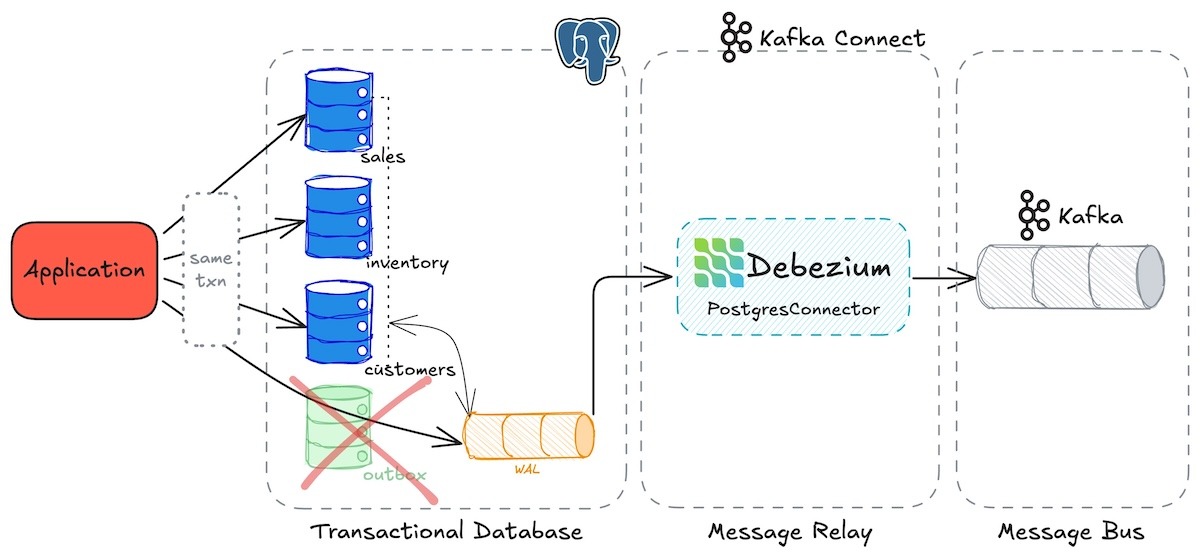
They can, if each record has one owner and a defined route between systems. For example, Shopify may hold sales orders, an IMS may control physical stock, and QuickBooks may hold the accounting ledger. Marketplace settlements add fees, refunds, and payout information.
Build a source-of-truth matrix: one row per record, naming the app that creates it, where it goes, and who corrects it when the systems disagree.
| Record | Question to settle | Confirm that |
|---|---|---|
| SKU | Who creates or changes item identifiers? | One item maps to the correct counterpart. |
| Sellable quantity | Which application controls on-hand and reserved units? | Orders and adjustments affect the right stock. |
| Inventory cost | Which system maintains cost layers or average cost? | Valuation enters the right accounting records. |
| Sales orders | Which system originates sales? | Orders and invoices are not duplicated. |
| Marketplace fees | Where are commissions and charges classified? | Fees remain distinct from gross sales. |
| Sales tax | Which system provides the relevant tax data? | Tax mapping follows the business’s requirements. |
| Payouts | Who reconciles marketplace settlements? | Net deposits tie to orders and adjustments. |
| Returns | Which application originates the reversal? | Stock and financial effects both reverse correctly. |
Marketplace settlement is the most revealing test. A net deposit can combine several orders with commissions, refunds, and adjustments, and recording it as gross revenue changes the accounting result.
An ecommerce seller wanted QuickBooks to stay the source of truth across Amazon, Walmart, and eBay. Their concern was settlement fees and tax handling:
I’m not sure about you guys, but I’m desperately looking for a software that can both bring in orders AND sync inventory across sales channels using quickbooks as the source of truth. I’m also looking for something that can handle payouts/order comissions fees. For context, I’ve been using webgility. It’s fine for amazon, but for Walmart & ebay, I’ve had an awful experience. It doesn’t handle walmart payouts/fees whatsoever, and is very buggy w/ respect to handling sales tax correctly. With eBay, it seems the software can’t handle ebay payouts whatsoever; I feel like I’ve been paying for a headache thus far. Any recommendations for software that can do what I’m looking for? I’d like it for a reasonable price, but at the end of the day, my biggest “want” is making sure I can trust the software that I’m paying for, which I haven’t been able to thus far.
The Zoho Inventory QuickBooks Online integration guide documents importing selected accounts and contacts from QuickBooks and exporting supported invoices, bills, and credits from Zoho Inventory to QuickBooks. Journal synchronization is configured separately and can update Inventory Asset and COGS in the accounting ledger.
Give every row of the matrix a source, destination, synchronization direction, expected timing, and correction owner. Include the refund and settlement flow so you can trace financial records back to the sales that produced them.
When do production, repairs, or multiple locations justify more than basic inventory?
Resale means finished goods bought and later sold. Repairs and manufacturing add parts allocated to jobs, work in progress, and finished items built from components. Multiple sites add transfers that must preserve stock value.
Long-running repair jobs risk forgotten components and lost paperwork. One workshop operator described the strain of handling stock for a retail counter, repairs, and manufacturing:
I run a small business that we have struggled to implement an effective inventory management system that works for our retail front, workshop repairs and OEM manufacturing. Currently we are using MYOB Accountright which is fine for in and out stock like counter sales. We have been using the auto build feature which is extremely restrictive, annoying and time consuming to use. Our workshop/manufacturing struggles to keep track of individual parts, especially as some of our repairs or builds can take multiple months or have thousands of parts. Currently our process is to write part numbers down on paper job cards, hand them into the office at the end of the day then collate all that paperwork after the job is done then create the build or invoice out the parts to the customer. With small – medium jobs this is fine. Other times it is slow, clunky and can end up with 20 – 30 bits of paper with various numbers written down. The workshop forgets parts some times or wrong parts are billed out due to input error in the office.
A system that handles counter sales may need job costing, component consumption, and production records before it can support that operation.
Run the trial that matches your business: consume a component on a job, complete a finished assembly, or transfer stock between locations without making a sale. Add lot, serial, or expiry tracking if you use them. If an option cannot complete a required step without heavy manual reconciliation, it fails. The complete procedure is in a short accounting-reconciliation trial.
How do you test a connector, migration, and support terms before buying?
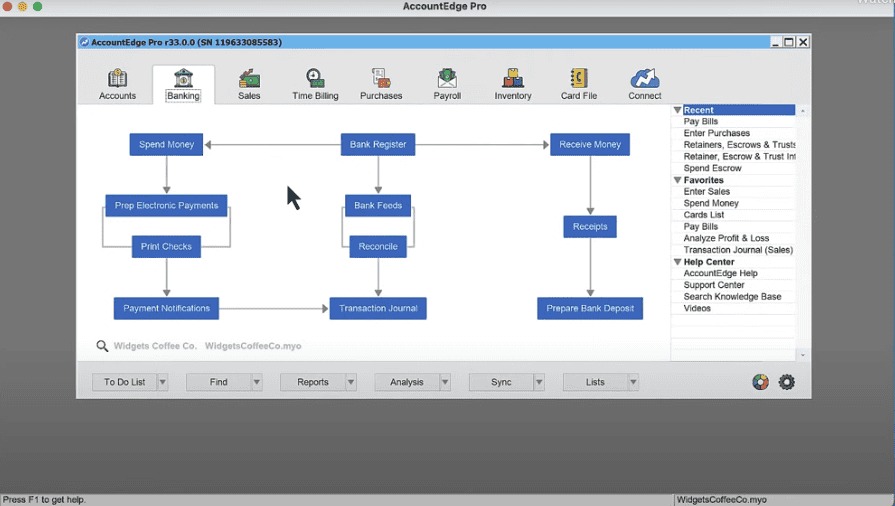
Test the connector’s recovery with an ordinary transaction, a failed synchronization, a retry, and a correction. Look for duplicate records and read the error messages.
For migration, reconcile opening stock, SKU mappings, outstanding orders, inventory valuation, and opening accounting balances. Keep an export and an exception log. For opening balances, see how to map accounts and reconcile opening balances.
Before you cancel the old system, confirm who supports the connector, which help requires a contract, and which data you can export.
What should be on your shortlist and full-cost comparison?
Compare specific product configurations that can run your workflow. A familiar brand or a low base subscription price does not make up for a missing costing method, an unusable manufacturing function, or a failed ledger test.
| Decision item | Native accounting inventory | IMS plus accounting | ERP |
|---|---|---|---|
| Documented product examples | QuickBooks Online Plus/Advanced; Xero tracked inventory | Zoho Inventory with Zoho Books or QuickBooks Online | Odoo accounting and inventory configuration |
| Accounting must-have | Cost method and inventory-to-GL behavior in the selected edition | Costing, synchronization, and account mappings across both apps | Valuation and posting configuration across modules |
| Operational must-have | Required locations and stock functions | Required fulfillment, channels, and warehouse control | Required production, work in progress, and finance processes |
| Setup and support | Plan access, setup, users, and reporting | Subscriptions, connectors, maintenance, support ownership | Implementation, configuration, training, support |
| Exit path | Stock and accounting exports | Exports and reconciliation from both systems | Operational and financial export/migration |
For each option, record the exact US edition and the modules you need.
Compare prices on the same scope. Count subscriptions, seats, SKUs or locations when billable, connectors, additional channels, onboarding, migration, support, and reporting. Get 12-month and 24-month quotes with their billing terms. To line up quotes over 24 months, see how to use a consistent 24-month comparison.
Only rank price and convenience among options that reconcile required stock movements with the ledger. An unusable export or unexplained variance ends that comparison.
Speak Your Mind